Justice is not a zero-sum game. Reflections from Synod
Date Posted: Feb 14, 2026.
Ralph Fiennes in scarlet, Oscar nominated vestments, and Church Times headlines have so far been my touch points for Christian governance. But as a member of Church Urban Fund’s team, I need to know more. If I’m to champion grassroots voices sharing the truth of poverty, I need to know how we make change locally and through the system.
February’s General Synod in London provided that opportunity. The debate on ‘Poverty and the church: 40 years after Faith in The City’ invited discussion on:
- the state of poverty in the UK
- the Church’s sense of calling and mission to address poverty
- approaches which draw on our Anglican marks of mission, and in doing so highlight the importance of lived experience; and
- how the CofE – nationally and locally – can play a practical and prophetic role in ending poverty.
Seeing how this works, who speaks (and who does not), and what happens next could help inform our approach to equipping churches and networks with the means to address poverty.
But will they let me in, will the debate be overpowered by discussions on sustainable church flowers, or will I have to wait until the next quinquennium (when I’ve worked out the terminology)?
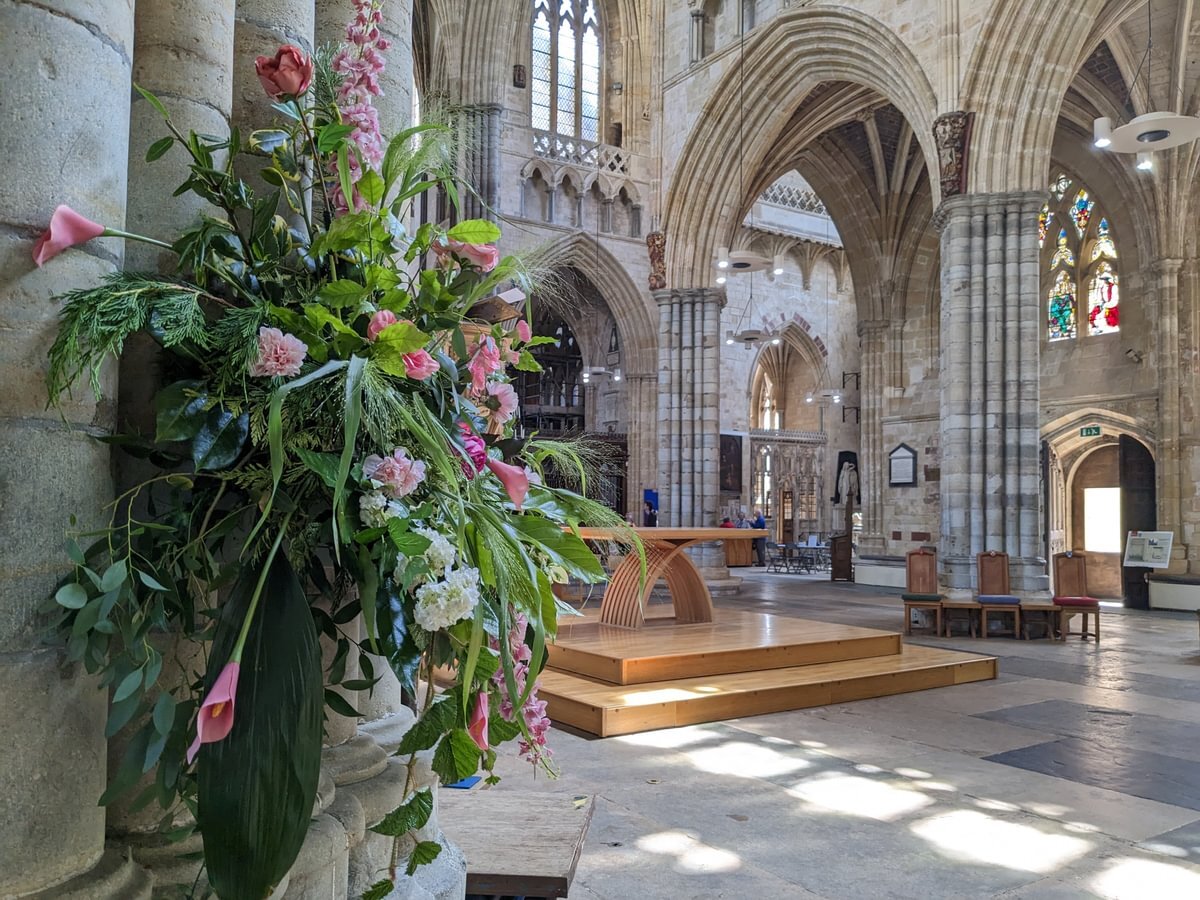
I was there to see the flowers roundly, robustly and deservedly debated. And in a surprisingly familiar way, with reference to asset-based community development, — an approach to community engagement that helps churches seek hopeful, practical ways to engage their local contexts.
What stood out for me was an appreciation for the gifts God has given us. For using seasonal flowers from our gardens, churchyards and hedgerows, and celebrating the people who so skilfully weave those gifts into visible signs of welcome and worship.
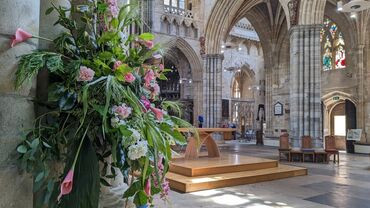
“Consider the lilies of the field, how they grow; they neither toil nor spin, yet I tell you, even Solomon in all his glory was not clothed like one of these.” Matthew 6:28-29
That our arrangements are an expression of a particular time and place, a very visible example of faith in action, and that “what we place on our altars says something about what we value.” (Jane Rosam, Rochester) If we value the local, including our flowers and the people who arrange them, then we should see that in our churches.
The power of parish
This debate wasn’t just about flowers and how we use them. It was a lively example of how individual parishes can work more widely, and together, to push a seemingly trivial matter on to the national stage. That “small things matter.” (Abigail Walsh, Lichfield)
Despite an attempt to move on from this ‘modest’ motion to next business, and admissions of initial mild annoyance at its inclusion, we were reminded by one of those same sceptics that Synod can change minds, and that ‘Justice is an ecosystem, and when we seek to pursue justice in one area, it will lead into justice in other areas.” (James Menzies, Salisbury).
Justice is not a zero-sum game
Surprised but encouraged by the rigour of debate so far, I was unsure what to expect from the debate on poverty. Were people tired, would justice in one area actually lead to justice in others?
Given the number of people keen to speak, my questions were happily answered.
We heard from two people so moved they gave their debut Synod speeches on the matter; from a Young Adult, unable to vote but compelled to speak; and from Archbishop Stephen Cottrell, a veteran of Synod and well versed in the theology and practice of tackling poverty, yet still engaged and vocal in his support of the motion.
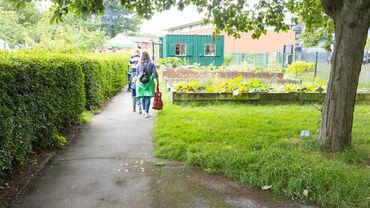
Representatives from around the country spoke movingly of the poverty around them. A new vicar, sat in the only chair in a lounge that also served as a bedroom, being offered with generosity the only food the person had - a boiled egg’ (Adrian Clarke, Colindale). Rural poverty “tucked behind hedgerows and closed doors” (Kina Robertshaw, Hereford), about “people poorly treated by policies and laws” (Kate Wharton, Liverpool) and who felt “abandoned by God.” (Lesley Jones, Durham)
Despite obvious need, the motion didn’t go unchallenged. Mooted amendments highlighted the disproportionate number and effect of poverty on Black and ethnic minority communities; on funding for a renewed commitment to tackling poverty; and on the kinds of language we use to describe those experiencing poverty. James McCluskey, Chelmsford, opposed the motion in its entirety (one among just two hands I could see), despite very much wanting to support it. He worried about the risk of passing a motion we cannot fulfil, of “offering a stone, when we need to offer them bread.”

There was a consistent call for action, not words.
These challenges deepened the conversation and showed us where the work might be needed most, and in their range and complexity showed us that local people know their communities best and are best placed to tackle what’s most pressing in each neighbourhood. That parishes are central to community, both in their physical buildings and essential pastoral care they provide.
But they didn’t undermine the collective resolve I heard to tackle poverty. We heard about projects helping through toddler groups, food provision and ESOL classes, through ecumenical and inter-faith partnership. We learned about work that earned the respect of the local police, councillors and MPs, and involvement in government discussions. But that it isn’t just, or at all, about providing services for people, “It’s about working with, not to.” (Emma Sykes, Birmingham).
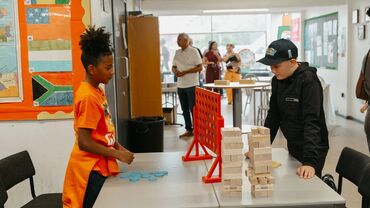
That working in low-income communities is hard but joyful, and results in a “Vivid picture of what it means to be the kingdom of God.” (Kate Wharton, Liverpool)
Already extended by 15 minutes, and with the motion for closure opposed by several hands still hungry for more, discussion could have gone over into lunch and well beyond. We'll be keeping the debate alive with resources that support church action, largescale and small, in rural and urban areas, and celebrating the motion come to fruition in stories of good news from across the country.
Far from being tired, I felt energised by Synod’s rallying cry for action not words, to put people first and listen to those living in poverty. It was clear that grassroots work – whether flowers or poverty – could and would be heard at the highest levels and acted on. The call to be brave and work in partnership was loud and clear, and the time is here to act.
“It’s really important that we remember the people as well as the percentages.”
(Lesley Jones, Durham)
But here are some of those numbers (where 1 is the most deprived of 12,178 parishes)
Click on the links to find out much more about the challenges these parishes face, and how they compare to the rest of the diocese and country.
Data provided from our Look Up Tool, where you can so find out about your parish.
With huge thanks to those who spoke for and challenged the motion.
Kate Wharton - Clergy - Liverpool
Roby: St Bartholomew
1,106
Emma Sykes - Clergy - Birmingham
Erdington: St Barnabas
512
Robert Thompson - Clergy - London
Saint Mary with All Souls, Kilburn and Saint James, West Hampstead
3,108
Andrew Mumby - Clergy - Southwark
Walworth: St Peter
1,050
Alex Frost - Clergy - Blackburn
Burnley (Habergham Eaves): St Matthew the Apostle
256
Adrian Clarke - Clergy - London
St Matthias Colindale
3,845
Lesley jones - Clergy – Durham
Jarrow and Simonside
503
Chantal Noppen - Clergy - Durham
North Wearside
367
Neil Robbie - Clergy – Lichfield
West Bromwich: Holy Trinity
424
Kina Robertshaw - Clergy - Hereford
Bromyard
2,754
James McCluskey - Clergy – Chelmsford
Colchester: St James & St Paul
4,367
Fiona MacMillan - Laity – London
St Martin-in-the-Fields
2,576
We were reminded that beyond local representation, flowers represent so much more in Christian art and theology
Lilies: Artists often depict the angel Gabriel bringing a lily to Mary to signify her soul's purity and innocence
Roses: Images of sacrifice and love
Saints and their flowers
- St. John the Baptist: Hypericum (St. John's Wort).
- St. Joan of Arc: Wildflowers
- St. Anthony of Padua: white lily
- St. Francis of Assisi: thornless rose
- St. Mary Magdalene: African Lily
Blooming lovely tips to make your church flowers sustainable




Watch a recording of the debates (from 1:26:14):