Ordinary Time, when the fire of Pentecost becomes warmth for someone else
Date Posted: May 24, 2026.
The extraordinary in Ordinary Time
After all the anticipation and excitement of Lent, Easter and Pentecost, ‘Ordinary Time’ can feel like a rather boring after-party. The great drama of cross, empty tomb and rushing wind gives way to green Sundays through the long months of summer.
Anglicans often call this season the Sundays after Trinity. Catholics call it Ordinary Time. Neither name is especially good marketing, but both tell us something important. The Christian life is not lived only in moments of intensity. It is not sustained by mountaintop experiences alone. Most discipleship takes place in the ordinary run of things: the parish newsletter, the shared lunch, the foodbank rota, the difficult meeting, the visit to someone who has not been seen at church for a while.
And here is the point. There is no such thing as ordinary to God.
What is ordinary time?
The word ordinary does not mean dull. It comes from order. Ordinary Time is ordered time. Time placed under God’s patient discipline. Time in which the seed grows secretly. Time in which grace does its slow work. Having been confronted in Lent with our need for repentance, filled at Easter with the joy of resurrection, and sent at Pentecost in the power of the Spirit, we must now live as though all that were true.
That is usually where things become interesting.
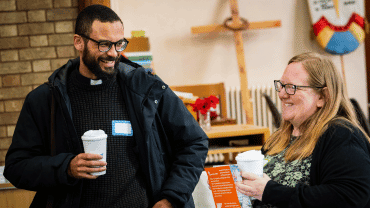
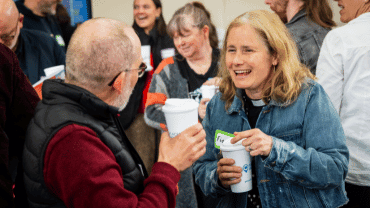
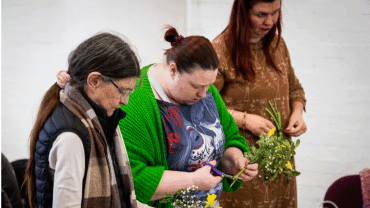
As Director of Caritas Westminster, I have the privilege of seeing churches across London and Hertfordshire doing extraordinary things in very ordinary ways. I see parishioners arriving early on Saturday mornings to sort food donations. I see volunteers sitting patiently with people who are lonely, frightened or ashamed, refusing to reduce them to a problem to be solved. I see churches opening warm spaces, hosting advice services, accompanying refugees, supporting women escaping abuse, welcoming people with disabilities, visiting prisoners and befriending families who have simply run out of road.

None of this looks dramatic from the outside. Someone notices a need. Someone else makes tea. A rota appears. A cupboard is cleared. A priest says, “Yes, of course, use the hall.” And suddenly the Church is doing what the Church has always done: making present, here and now, the love which every person needs.
Pope Benedict XVI once wrote that no ordering of the State is so just that it can eliminate the need for a service of love. I take this not as a rebuke to politics, but as a simple statement of Christian anthropology. We need good laws, fair systems and competent public services. Of course we do. But human beings do not live by systems alone. We need to be known. We need to be accompanied. We need someone to cross the road when everyone else passes by.
That is where the ordinary becomes extraordinary.
One temptation for those involved in faith-based social action is to imagine that scale is the only serious measure of impact. I am a data geek by background, so I understand the attraction. Numbers matter; outcomes matter. We should be organised, professional and accountable – but the most important things in life often elude measurement. The quiet restoration of trust. The first smile after months of grief. The moment when someone who came to receive help discovers that they, too, have gifts to offer.
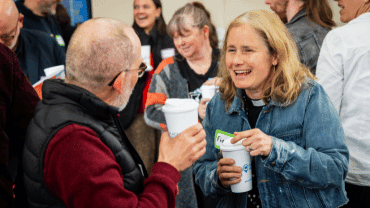
These are not marginal details. They are signs of the kingdom.
Across the Diocese of Westminster, I have seen affluent parishes sharing food with their poorer neighbours. I have seen Catholic, Anglican and other Christian communities working together because the need in front of them mattered more than the label above the door. I have seen volunteers discover that service is not a hobby added to faith, but an indispensable expression of faith itself.
Ordinary Time asks whether the fire of Pentecost has become warmth for someone else.
It asks whether Easter joy has become patience, hospitality and courage. It asks whether our worship has formed us into people who can notice Christ in the person who is hungry, isolated, undocumented, disabled, exhausted or afraid.
So perhaps this long green season is not a pause after all. Perhaps it is the test. Not a boring time, but a growing time. Not a liturgical waiting room, but the place where the extraordinary grace of God takes flesh in ordinary Christian lives.
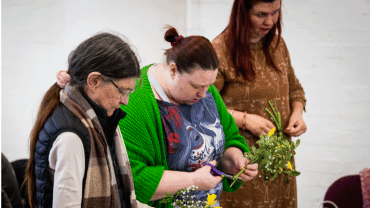

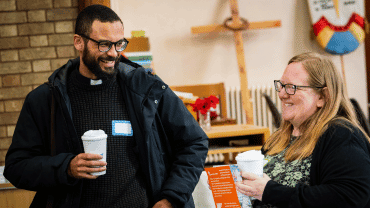
And if that is true, then Ordinary Time may be the most demanding season of all. Because holiness is not somewhere else. It is here. In this parish. On this estate. At this kitchen table. In this small act of mercy. Always ordinary. Always extraordinary.
Richard Harries
Richard is a CUF trustee and Director of Caritas Westminster, the social action agency of the Roman Catholic Diocese of Westminster.
He was previously Director of Research & Development at the Power to Change Trust and before that a senior civil servant and deputy director of the independent think tank Re:State.
He has extensive experience of research and policymaking in the public sector and third sector and has advised governments in Australia, Japan, Europe, Africa and the Middle East about various aspects of public service reform.
He has published on a wide range of topics, including crime and criminal justice, deregulation, fiscal sustainability, philanthropy, social investment and impact evaluation.
Richard is a trustee of various Christian charities and sits on the Advisory Council of the Bayes Business School Centre for Charity Effectiveness.